
Di’s Studio Designs
-
Home
-
About the Artist
-
Decorative Candleholders
-
Faux Floral Designs and Arrangements
-
Celtic Wood Burned Art
-
Fairy Houses
-
Blog
-
Di’s Studio Designs Monthly News
-
Product Testimonials
-
Contact
-
Privacy and Disclosure Policies
-
FAQs
-
Useful Resource Links
11 interior decorating tips that help reduce anxiety and depression
0 Comments Maybe it’s the time of year—cold, dark, uninspiring—but I’ve been thinking a lot about creating warmth and healing in my interior spaces. My studies in interior design have made me aware of the effects your spaces can have on your mood and sense of self. There is an art to designing spaces, and I love how interior design can help the people who inhabit the space. As someone who has had to deal with lifelong depression and anxiety, I am also acutely aware of the need to have personal spaces that can make me feel more at ease and calm.
There are many clinical blog articles on this topic, but I wanted to put a more human spin on this topic from the point of view of someone who has not only studied design but also lives with anxiety and depression. I can tell you from experience that your interior spaces affect how you feel about life yourself and the world around you. Your spaces should remind you that you have your special light while providing you with a haven from the outside world.
So, how can you create interior spaces that help with anxiety and depression while reflecting your personality? Below are ten tips that have helped me in my struggles… Tip 1: Embrace plants & Biophilic design
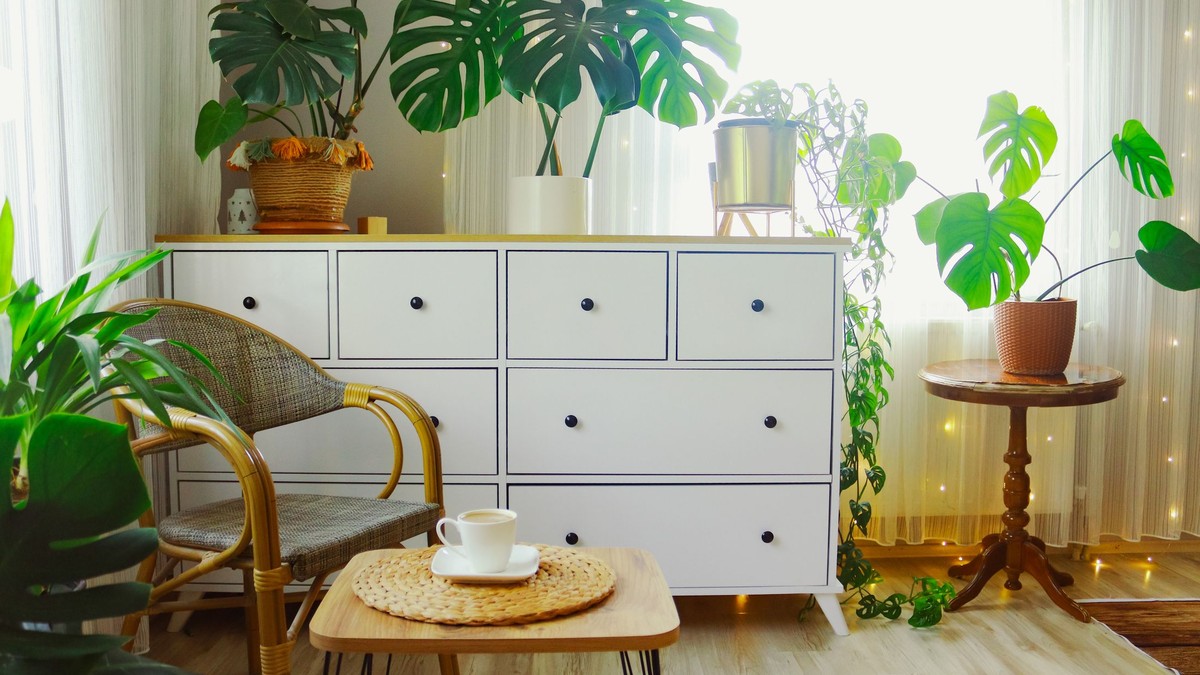
Biophilia—or biophilic design—is all about bringing the outdoors inside. You do this by adding houseplants, fresh-cut flowers, blooming plants, water fountains, fireplaces—anything you can do to add the sights and sounds of nature. Designing your space by introducing natural elements will add to the sense of calm and healing within your space. (Read about a related study on horticultural therapy and mental health here.) Flowering plants work very well but can trigger allergies. Non-flowering green plants work just as well in creating a calm, soothing interior space. If you don’t have a green thumb, it IS okay to use faux florals. There are so many florals out there that are very authentic looking, and you could even mix and match live with artificial. Do it right, and nobody will know the difference!
Plants clean the indoor air and add oxygen. (That has been contested, however, by a few recent studies). Even photos or paintings of outdoor scenes are beneficial, adding a visual representation of biophilic design to your space. Or get the real thing by using views to the outside through your windows while using those same windows to let in natural sunlight and heat (in the winter). The idea behind biophilic design is to tap into the healing properties of nature by bringing some of the natural elements into your interior space. Tip 2: Let in the natural light
As I mentioned under the tip on biophilic design, find ways to bring natural light into your space. It’s so important to be exposed to natural sunlight, and it not only helps you, but it helps your plants as well! While it is tempting to curl into a ball and hibernate with the blinds drawn (and there is a time for that), it is not healthy to remain there. Natural light feeds the endorphins you need to feel better and is known to be healing and stress-reducing. According to Healthline, natural light raises your endorphins and serotonin levels and helps us with the circadian rhythms that help us rest and sleep properly. All of this improves our mental health and physical well-being. Tip 3: Create mood lighting
When you don’t have natural light, you can create a sense of warmth and ambiance with layers of soft artificial light. Get creative with fairy lights, candles, LED candles, and accent lighting! We are attracted to light, so lighting up the space to create points of interest elevates your mood. Even the flicker of candlelight is beneficial. Any warm light creates a cozy ambiance to the space, making it feel more inviting, relaxing, and safe. Tip 4: Tone down the reflective decor
Limit shiny objects and mirrors when you are trying to design a soothing space. The way that light bounces off shiny objects can be jarring and unsettling when you are depressed or anxious and adds to the visual clutter effect. Also, seeing your reflections in mirrors when you are suffering from anxiety and depression can be a bit too much. So maybe use mirrors and reflective surfaces sparingly when your objective is to create an environment where you can decompress. Tip 5: Decrease physical and visual clutter
I can personally speak to the benefits of getting rid of unnecessary clutter. Too much clutter is hard to keep clean and can increase stress. Ideally, minimize the physical and visual clutter (i.e., too many patterns). Your space doesn’t have to be empty, but you don’t want to think about cleaning when trying to relax. Also, the eyes need to relax and settle on things that feel good. You want your decor to be personal and uplifting and have meaning, but keep it simple when you suffer from anxiety and depression. Too much “stuff” can produce a claustrophobic sensation and increase your cortisol levels (which increases stress), which is no good when trying to unwind. Sometimes, you need to detach from the outside world in a space that feels like a soothing cocoon, and too much clutter makes it hard to shut the world out. A healing space will allow you to block out external intrusions, focus on yourself, and provide the physical and mental space to slow down and practice healing and self-care. Tip 6: Use meaningful decorative accents
Only use those accessories and artwork that evoke positive feelings or memories. Be deliberate and meaningful in your choice of decorative accents. This is where you add the “you” into your design. Surround yourself with decor that evokes positive feelings—such as photos, sayings, artwork, and spiritual or religious symbols. Choose uplifting decor that takes you to a place where you feel alive and content in a space where you can heal. Tip 7: Use textiles to create coziness
I’ve fallen in love with hygge! According to Visit Denmark, hygge means embracing the simple life, enjoying the moment, and finding pleasure in everyday things. Use the hygge mindset to create cozy spots to “land” in your home with blankets, pillows, blackout curtains (for bedrooms), and comfortable textiles. The ultimate hygge space is a snug spot or nook where you curl up with a book, nap, or gaze out of the window. When we think of cozy spaces, we tend to visualize lots of throw pillows and blankets, area rugs, layered window treatments, etc. This combination of rich textures creates a sense of warmth and pleasantness…a place to cuddle, read, drink a cup of hot cocoa, drink a glass of wine, nap, and decompress. Tip 8: Use neutral colors in your spaces
If you’re trying to relax and calm the mind, you want to stick with more neutral colors, such as blue, tan, white, green, or any colors that are more earthy in value. Blue reduces stress and blood pressure and works well in bedrooms for its calming effect. Creams, browns, and greens are earthy and calming, reminding us of nature. White and beige can give an interior a sense of space and cleanliness (although too much white can feel clinical, at least for me). If you need more color stimulation, add small pops of vibrant colors in pillows and accessories. These can be easily removed or exchanged as your mood changes. Tip 9: Inject your space with pleasant fragrances
Use your sense of smell to help create relaxing interior spaces. This can be tricky because many items used to scent our homes contain dangerous VOCs or air pollutants. Be aware of these dangers and choose products wisely (such as candles with low levels of phthalates). Safe fragrances and scents will take you to your happy place and leave your home smelling amazing! There are many options—candle warmers, wax melts, potpourri, scented candles, fresh or dried herbs—so you can take your pick based on safety, budget, and preferences. Just an FYI…Lavender is well known (even in the medical field) for creating a sense of calm, reducing stress levels, and encouraging healing. Tip 10: Keep trends to a minimum
It may be tempting to follow the latest trends in home decor but be mindful that those trends represent other peoples’ values. Be deliberate about what you put in your space, and make sure it reflects YOUR values and the things that make you feel good inside. This makes the space a haven, so you can tune in with yourself and tune out the outside world. If there isn’t something in your space that makes you smile, try to find something that DOES make you feel good. Remember that trends come and go, so don’t spend money on what is hot right now because it will be next week’s trash, and you’ll be stressing over spending more money to replace things! Tip 11: Hide the electronics
Address your use of technology and its visual placement within your space. Find ways to make it disappear so you can relax, especially in your bedroom. First, let’s talk about the visual effects. Let’s be honest, technology is unattractive and does not fit into any interior space except maybe an ultra-modern design. The high visibility of electronics in a room creates clutter and dust and is a constant reminder of messages, emails, and work. If you can find ways to put it away or hide it, do that. Also, the blue light from these devices is horrible for relaxation. (Sleep Foundation has a terrific article that discusses how electronics in the bedroom impacts sleep.) And finally, we don’t fully appreciate the jarring nature of the sounds in the videos and programs we watch. They have far more negative psychological effects than we realize. It’s a good idea to limit exposure to electronic stimuli in the room any way you can. As a person who suffers from lifelong anxiety, depression, and PTSD, I can tell you that there is no easy fix for mental health issues. Getting better often comes down to the right combination of several things, and your mental well-being can change from day to day—hell, it can change from minute to minute! The key is to actively participate in your well-being, making conscious decisions to help lift you out of the darkness or ride out a crisis. Sometimes, it is as simple as changing a few things in your environment. Other times, you’ll need more extensive help. But the message here is you have the power to help yourself!
Disclaimer: I am not a mental health professional. Any information or advice is purely my own opinion based on widely accepted rules of design and my own experience. If you are suffering from mental health issues, please seek the advice of a trained mental health professional. Related blogs you may want to read:
Winter color palette ideas for your home decor Nine design trends for 2022 Eight ways to create cozy winter interiors after the holiday decor comes down Nine hygge decor ideas Biophilia in interior design This article may contain a few items or commercial mentions, but I only used them for demonstration purposes only. I am not endorsing any particular product or receiving any monetary gain for this blog.
0 Comments Leave a Reply.
|
AuthorDiane M. Lilly Welcome to Di’s Studio Designs blog! I invite you to share my creative journey and read along as I explore art, home decor, and nature… Subscribe to my monthly newsletter here so you never miss a blog post! Some of the posts on this site contain affiliate links. This means if you click on the link and purchase the item, I will receive an affiliate commission.
Categories
All Archives
January 2025 |


|
Copyright 2025 |
HOME ABOUT THE ARTIST DECORATIVE CANDLEHOLDERS FAUX FLORAL DESIGNS Celtic Wood Burned Art Fairy Houses Blog Contact FAQs Useful Resource Links |
Major credit cards accepted through Square. Apple Pay option available. This site also accepts PayPal payments for better online security, and it’s free to sign up! Gift cards are now available for purchase!
|
-
Home
-
About the Artist
-
Decorative Candleholders
-
Faux Floral Designs and Arrangements
-
Celtic Wood Burned Art
-
Fairy Houses
-
Blog
-
Di’s Studio Designs Monthly News
-
Product Testimonials
-
Contact
-
Privacy and Disclosure Policies
-
FAQs
-
Useful Resource Links